- December 28, 2022
- by admin
- Digital Marketing
- 0 Comments
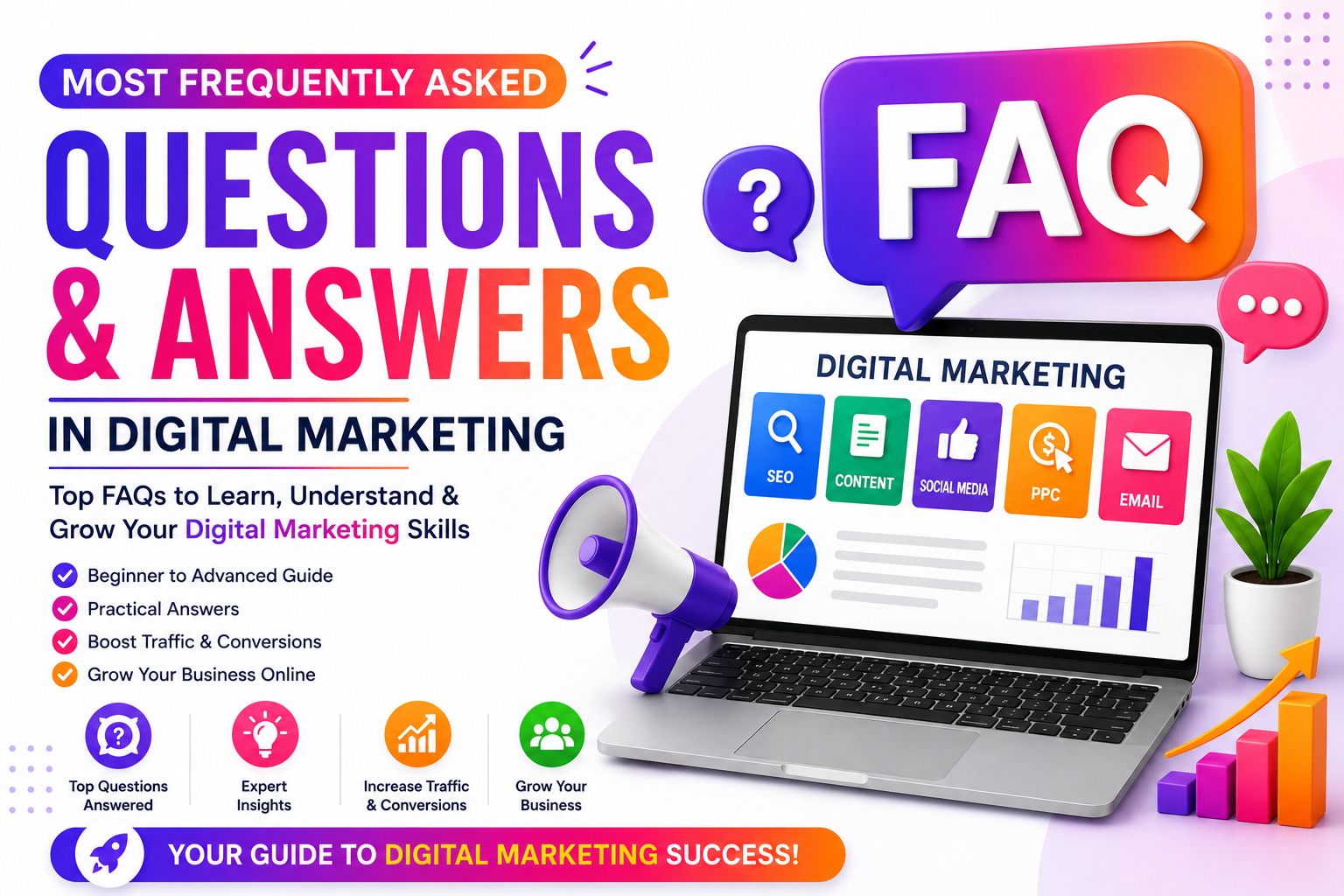
Most Frequently Asked Questions (FAQs) About Digital Marketing
Digital marketing has become one of the most effective ways for businesses to attract customers, increase brand awareness, and boost sales. Whether you’re a beginner, business owner, or marketing professional, you probably have many questions about digital marketing.
This comprehensive guide answers the most common digital marketing questions to help you understand how it works and how you can use it to grow your business.
1. What is Digital Marketing?
Digital marketing is the promotion of products or services using digital channels such as:
- Search Engines (Google, Bing)
- Social Media
- Websites
- Mobile Apps
- Online Advertising
Its primary goal is to reach potential customers online and convert them into paying customers.
2. Why is Digital Marketing Important?
Digital marketing helps businesses:
- Reach a global audience
- Generate qualified leads
- Increase website traffic
- Improve brand awareness
- Build customer relationships
- Track campaign performance
- Increase sales and ROI
3. What are the Types of Digital Marketing?
Major types include:
- Search Engine Optimization (SEO)
- Search Engine Marketing (SEM)
- Pay-Per-Click (PPC)
- Social Media Marketing (SMM)
- Content Marketing
- Email Marketing
- Affiliate Marketing
- Influencer Marketing
- Video Marketing
- Mobile Marketing
4. What is SEO?
SEO (Search Engine Optimization) is the process of improving a website’s visibility in search engine results without paying for ads.
SEO includes:
- Keyword Research
- On-page SEO
- Technical SEO
- Off-page SEO
- Link Building
- Local SEO
5. How Long Does SEO Take?
SEO usually takes:
- 3–6 months for initial improvements
- 6–12 months for competitive keywords
- Longer for highly competitive industries
SEO is a long-term strategy rather than an instant solution.
6. What is PPC Advertising?
PPC (Pay-Per-Click) is paid advertising where advertisers pay only when someone clicks on their ad.
Popular PPC platforms include:
- Google Ads
- Microsoft Ads
- Facebook Ads
- Instagram Ads
- LinkedIn Ads
7. What is Content Marketing?
Content marketing involves creating valuable content that educates, entertains, or solves problems for your audience.
Examples include:
- Blog posts
- Videos
- Infographics
- Podcasts
- E-books
- Case studies
8. What is Social Media Marketing?
Social media marketing promotes businesses through platforms such as:
- X (Twitter)
- TikTok
- YouTube
It helps increase engagement, followers, and sales.
9. What is Email Marketing?
Email marketing is sending promotional or informational emails to subscribers.
Benefits include:
- High ROI
- Customer retention
- Personalized communication
- Sales automation
- Lead nurturing
10. What is Local SEO?
Local SEO helps businesses appear in location-based searches like:
- “Dentist near me”
- “Best restaurant in Mumbai”
- “Digital marketing agency in Delhi”
It includes optimizing Google Business Profile, local citations, and reviews.
11. What are Keywords?
Keywords are the search terms users type into search engines.
Example:
- Best SEO agency
- Digital marketing services
- Learn SEO online
Choosing the right keywords helps attract the right audience.
12. What is Keyword Research?
Keyword research identifies what your target audience is searching for.
Popular tools include:
- Google Keyword Planner
- Ahrefs
- SEMrush
- Ubersuggest
- Moz
- Google Search Console
13. What is On-Page SEO?
On-page SEO involves optimizing:
- Titles
- Meta descriptions
- Headings
- Images
- URLs
- Internal links
- Content quality
14. What is Off-Page SEO?
Off-page SEO improves website authority through:
- Backlinks
- Brand mentions
- Social sharing
- Guest posting
- Digital PR
15. What are Backlinks?
Backlinks are links from one website to another.
High-quality backlinks:
- Improve domain authority
- Increase rankings
- Drive referral traffic
- Build trust
16. What is Google Ads?
Google Ads is Google’s advertising platform that allows businesses to display ads in search results, YouTube, Gmail, and partner websites.
17. What is Conversion Rate?
Conversion rate is the percentage of visitors who complete a desired action.
Examples:
- Purchase
- Sign-up
- Download
- Phone call
- Form submission
Formula:
Conversions ÷ Visitors × 100
18. What is ROI in Digital Marketing?
ROI (Return on Investment) measures campaign profitability.
Formula:
(Revenue – Marketing Cost) ÷ Marketing Cost × 100
19. Which Digital Marketing Channel Gives the Best ROI?
It depends on your business goals:
- SEO → Long-term growth
- PPC → Fast results
- Email Marketing → Excellent ROI
- Social Media → Brand awareness
- Content Marketing → Sustainable traffic
A combination of channels usually delivers the best results.
20. Is Digital Marketing Good for Small Businesses?
Yes.
Small businesses can:
- Reach local customers
- Generate leads
- Build brand awareness
- Compete with larger companies
- Measure marketing performance
21. How Much Does Digital Marketing Cost?
Costs vary depending on:
- Business size
- Industry
- Competition
- Advertising budget
- Marketing goals
Some businesses spend a few hundred dollars monthly, while others invest thousands.
22. Can I Learn Digital Marketing for Free?
Yes.
You can learn through:
- Google Skillshop
- HubSpot Academy
- YouTube tutorials
- Marketing blogs
- Free online courses
Practical experience is just as important as theory.
23. What Skills Are Needed in Digital Marketing?
Essential skills include:
- SEO
- Content writing
- Google Ads
- Social media management
- Analytics
- Email marketing
- Copywriting
- Graphic design basics
- Marketing strategy
24. Which is Better: SEO or PPC?
Both have advantages:
| SEO | PPC |
|---|---|
| Long-term results | Instant traffic |
| Free organic clicks | Paid clicks |
| Builds authority | Highly targeted |
| Sustainable | Budget dependent |
The best approach is often to combine both.
25. What are the Best Digital Marketing Tools?
Popular tools include:
- Google Analytics
- Google Search Console
- Google Ads
- Ahrefs
- SEMrush
- Canva
- Mailchimp
- HubSpot
- Buffer
- Hootsuite
Final Thoughts
Digital marketing continues to evolve with new technologies, platforms, and consumer behaviors. Understanding these frequently asked questions provides a strong foundation for building effective marketing strategies, whether you’re promoting a startup, growing an online store, or advancing your career.
The key to success is to stay updated, focus on delivering value to your audience, measure your results, and continuously optimize your campaigns. With the right mix of SEO, content marketing, social media, email marketing, and paid advertising, businesses of all sizes can achieve sustainable online growth.