
- August 26, 2021
- by admin
- Uncategorized
- 0 Comments
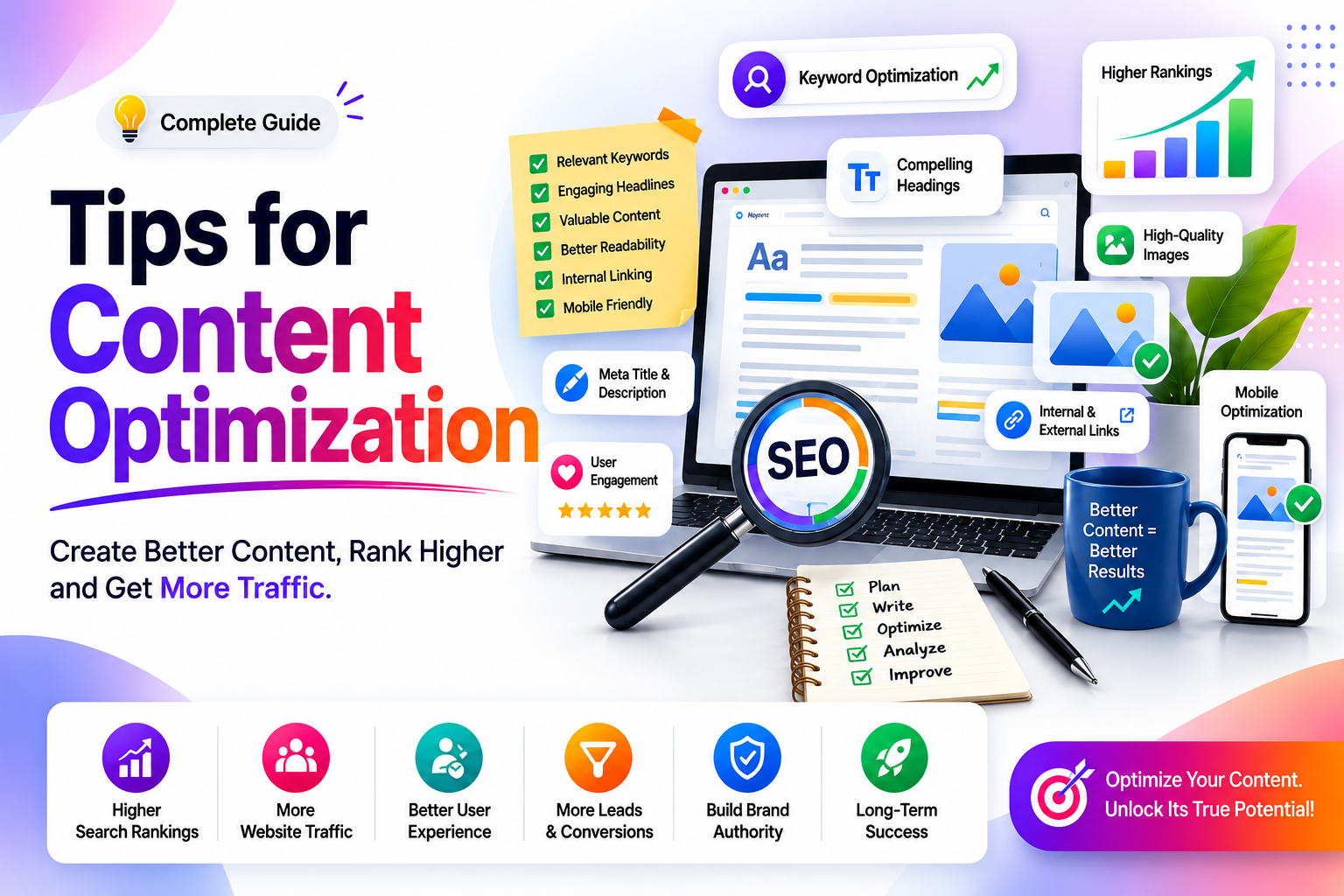
Tips for Content Optimization
Creating high-quality content is only the first step toward online success. To ensure your content reaches the right audience and ranks well on search engines, it needs to be optimized. Content optimization involves improving your content so that it is valuable for readers while also being easy for search engines to understand.
Whether you run a business website, blog, or eCommerce store, optimized content can increase organic traffic, improve user engagement, and generate more leads. In this guide, we’ll explore practical tips to help you optimize your content effectively.
What Is Content Optimization?
Content optimization is the process of enhancing your content to improve its visibility on search engines and provide a better experience for users. It includes keyword optimization, improving readability, adding relevant visuals, optimizing metadata, and ensuring the content aligns with user intent.
The goal is to create content that answers users’ questions while meeting search engine quality standards.
Why Content Optimization Matters
Optimized content helps your website:
- Rank higher in search engine results.
- Increase organic traffic.
- Improve user engagement.
- Reduce bounce rates.
- Generate more leads and conversions.
- Build authority in your industry.
Without optimization, even well-written content may struggle to reach your target audience.
1. Understand Search Intent
Before writing, determine what your audience is searching for and why. Search intent generally falls into four categories:
- Informational (learning something)
- Navigational (finding a specific website)
- Commercial (researching products or services)
- Transactional (ready to make a purchase)
Creating content that matches user intent increases the chances of ranking higher and satisfying your audience.
2. Conduct Keyword Research
Keywords help search engines understand your content.
Focus on:
- Primary keywords
- Secondary keywords
- Long-tail keywords
- Question-based keywords
Use your primary keyword naturally in:
- Title
- Introduction
- Headings
- Meta description
- URL
- Image alt text
- Conclusion
Avoid keyword stuffing, as it can negatively affect rankings.
3. Write Engaging Headlines
Your headline is the first thing readers notice.
A strong headline should:
- Include your primary keyword.
- Clearly explain the topic.
- Spark curiosity.
- Be concise and compelling.
For example:
Tips for Content Optimization That Improve SEO and User Experience
4. Create High-Quality Content
Google prioritizes content that provides value.
Your content should be:
- Accurate
- Original
- Well-researched
- Easy to understand
- Actionable
- Up to date
Focus on solving your readers’ problems rather than simply targeting keywords.
5. Structure Your Content Properly
Organized content is easier to read and crawl.
Use:
- H1 for the title
- H2 for main sections
- H3 for subtopics
- Bullet points
- Numbered lists
- Short paragraphs
A clear structure improves both readability and SEO.
6. Optimize Images
Images make content more engaging but should also be optimized.
Best practices include:
- Compress images for faster loading.
- Use descriptive file names.
- Add keyword-rich alt text.
- Choose high-quality visuals.
- Use modern formats like WebP when possible.
Optimized images improve page speed and accessibility.
7. Improve Readability
Readers prefer content that is easy to scan.
Improve readability by:
- Writing short paragraphs.
- Using simple language.
- Adding headings and subheadings.
- Including bullet points.
- Highlighting key information.
The easier your content is to read, the longer users are likely to stay on your page.
8. Add Internal and External Links
Internal links help users navigate your website and distribute SEO value across your pages.
External links to authoritative sources add credibility and provide additional context for readers.
Use links naturally and ensure they are relevant to the topic.
9. Write Effective Meta Titles and Descriptions
Your meta title and description influence click-through rates.
A good meta title should:
- Include the primary keyword.
- Stay within 50–60 characters.
- Clearly describe the page.
A compelling meta description should:
- Summarize the content.
- Include the keyword naturally.
- Encourage users to click.
10. Optimize for Mobile Users
Most users browse websites on mobile devices.
Ensure your content:
- Loads quickly.
- Uses responsive design.
- Has readable fonts.
- Features properly sized images.
- Includes easy-to-click buttons and links.
A mobile-friendly experience improves both user satisfaction and search rankings.
11. Update Existing Content
SEO isn’t a one-time task.
Regularly update your content by:
- Adding new information.
- Refreshing statistics.
- Replacing outdated screenshots.
- Improving keywords.
- Fixing broken links.
Fresh content signals relevance to search engines.
12. Include Clear Calls-to-Action (CTAs)
Guide readers toward the next step with effective CTAs.
Examples include:
- Contact Us
- Request a Free Consultation
- Subscribe to Our Newsletter
- Learn More
- Explore Our Services
Strategic CTAs help convert visitors into leads or customers.
Common Content Optimization Mistakes
Avoid these common errors:
- Keyword stuffing.
- Duplicate content.
- Ignoring user intent.
- Poor formatting.
- Slow-loading images.
- Missing meta descriptions.
- Broken internal links.
- Publishing outdated information.
Correcting these issues can significantly improve your content’s performance.
Best Practices for Long-Term Success
To consistently create high-performing content:
- Focus on quality over quantity.
- Publish content regularly.
- Monitor performance using analytics tools.
- Optimize for both users and search engines.
- Follow Google’s SEO best practices.
- Stay updated with industry trends and algorithm changes.
Consistency and continuous improvement are key to long-term SEO success.
How AffyAds Media Can Help
At AffyAds Media, we help businesses create content that attracts, engages, and converts. Our content optimization services are designed to improve search engine visibility while delivering real value to your audience.
Our expertise includes:
- Search Engine Optimization (SEO)
- Content Strategy
- Keyword Research
- Technical SEO
- Website Optimization
- Digital Marketing
- Conversion Rate Optimization (CRO)
Whether you’re building a new website or improving existing content, our team can help you achieve better rankings and measurable business growth.
Final Thoughts
Content optimization is an essential part of every successful digital marketing strategy. By understanding your audience, targeting the right keywords, improving readability, optimizing images, and keeping your content up to date, you can increase organic traffic and build long-term authority.
Remember, successful content isn’t just about ranking on Google—it’s about providing genuine value to your readers. When you combine user-focused content with SEO best practices, you create a strong foundation for sustainable online growth.
If you’re looking to improve your website’s performance and maximize your content’s potential, AffyAds Media is here to help you create content that drives results.